
Hello fellow hikers!
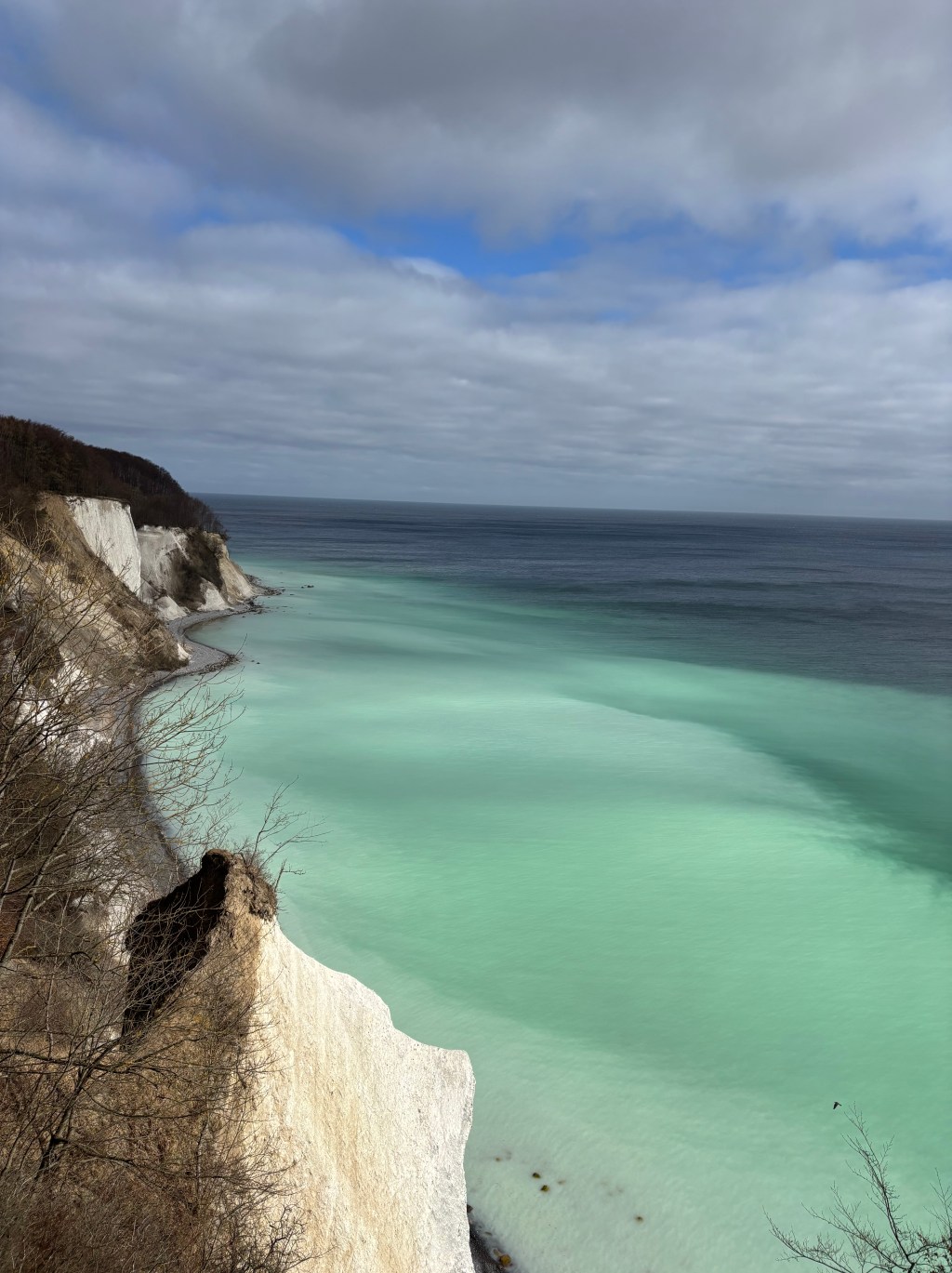
If you’re looking for one of the most breathtaking landscapes in Germany, the Kreidefelsen on the island of Rügen should be at the very top of your list.
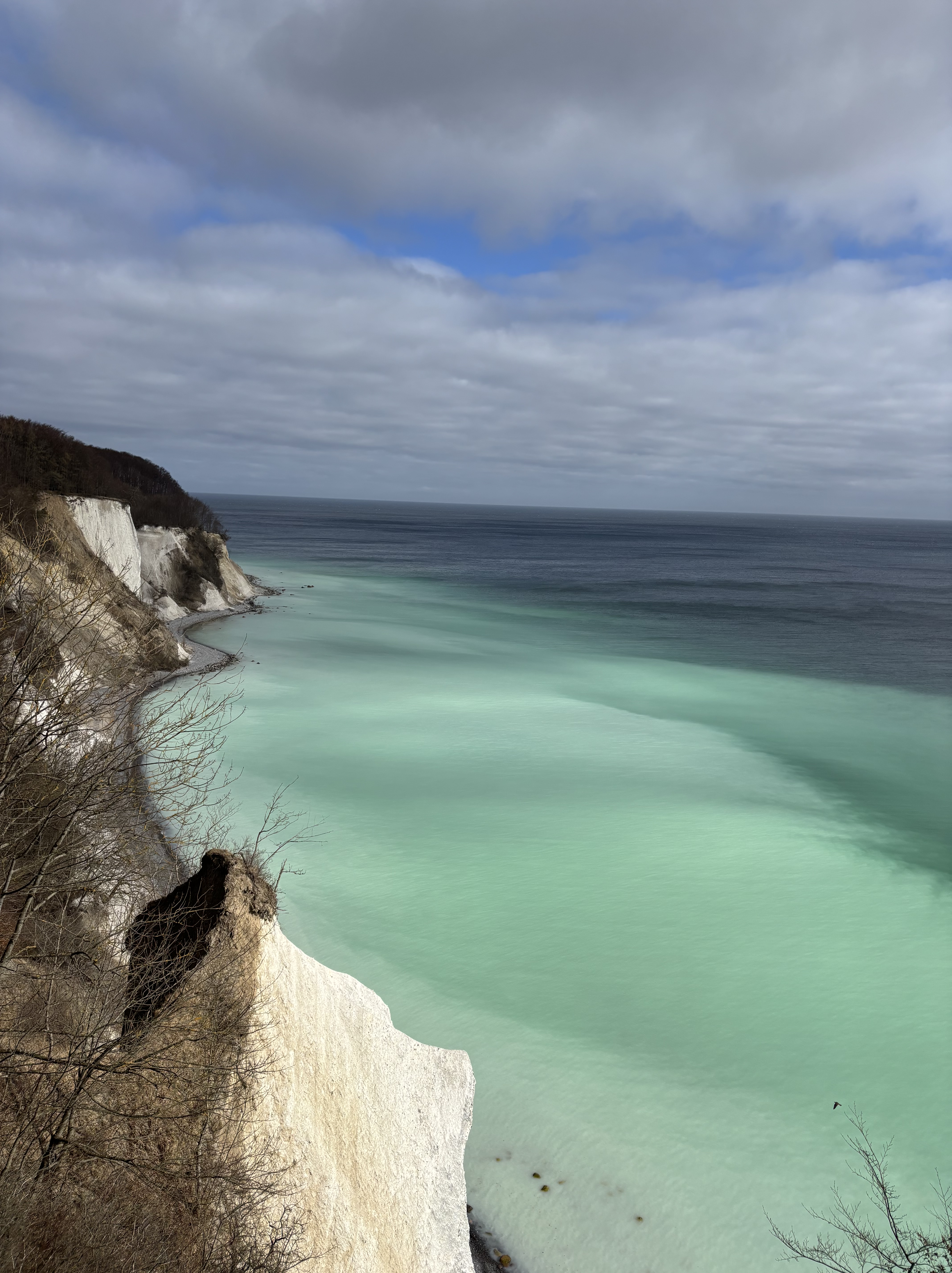
Rising high above the Baltic Sea, these iconic white chalk cliffs feel almost surreal—more like something you’d expect in a painting than in real life – or at least in any other place than Germany. Surrounded by dense beech forests in Jasmund National Park, the area offers some of the most scenic hiking trails in the country.
I could hardly believe my eyes when I saw the beauty of this hike in real life—is this really Germany? It took me 28 years of living in this country to discover it, and I hope I can help you experience it much sooner.
No worries though! This is a hike suitable for all ages. 😊 Whether you’re here for a relaxed walk or a longer coastal hike, this is a place that’s absolutely worth exploring.
In this guide I’ll walk you through everything you need to know to visit this magical place.
How to get to Rügen?
You might be wondering, where exactly is Rügen? Germany’s largest island lies in the northeast of the country, along the Baltic Sea coast in the state of Mecklenburg-Vorpommern. Known for its seaside resorts, rugged coastline, and unique natural landscapes, Rügen is a true hidden gem for outdoor lovers.
The famous Kreidefelsen (chalk cliffs) are located within Jasmund National Park in the northeast of the island. Here, bright white cliffs rise dramatically above the deep blue Baltic Sea, creating one of the most iconic and breathtaking views in all of Germany. The city of Sassnitz is located right at the entrance of the hiking trail of the Nationalpark.
Getting to Rügen is quite easy, especially from Berlin. You can take a direct train—either a regional train using the Deutschlandticket or an ICE—to Ostseebad Binz. From there, it’s simple to continue your journey by bus or local train to Sassnitz, which is close to the Kreidefelsen.
That said, if you’re planning a weekend trip and want to explore more of the island, traveling by car is definitely the more flexible option. It allows you to easily reach different viewpoints, beaches, and hiking trails at your own pace.
How to see the best views of the Kreidefelsen?
To experience the best views of the Kreidefelsen, I highly recommend hiking along the coastal trail Hochuferweg. Along the way, you’ll pass several stunning viewpoints, including Piratenschlucht, Wissower Klinken, Kollicker Ufer, Victoria-Sicht, and, last but not least, the famous Königsstuhl.
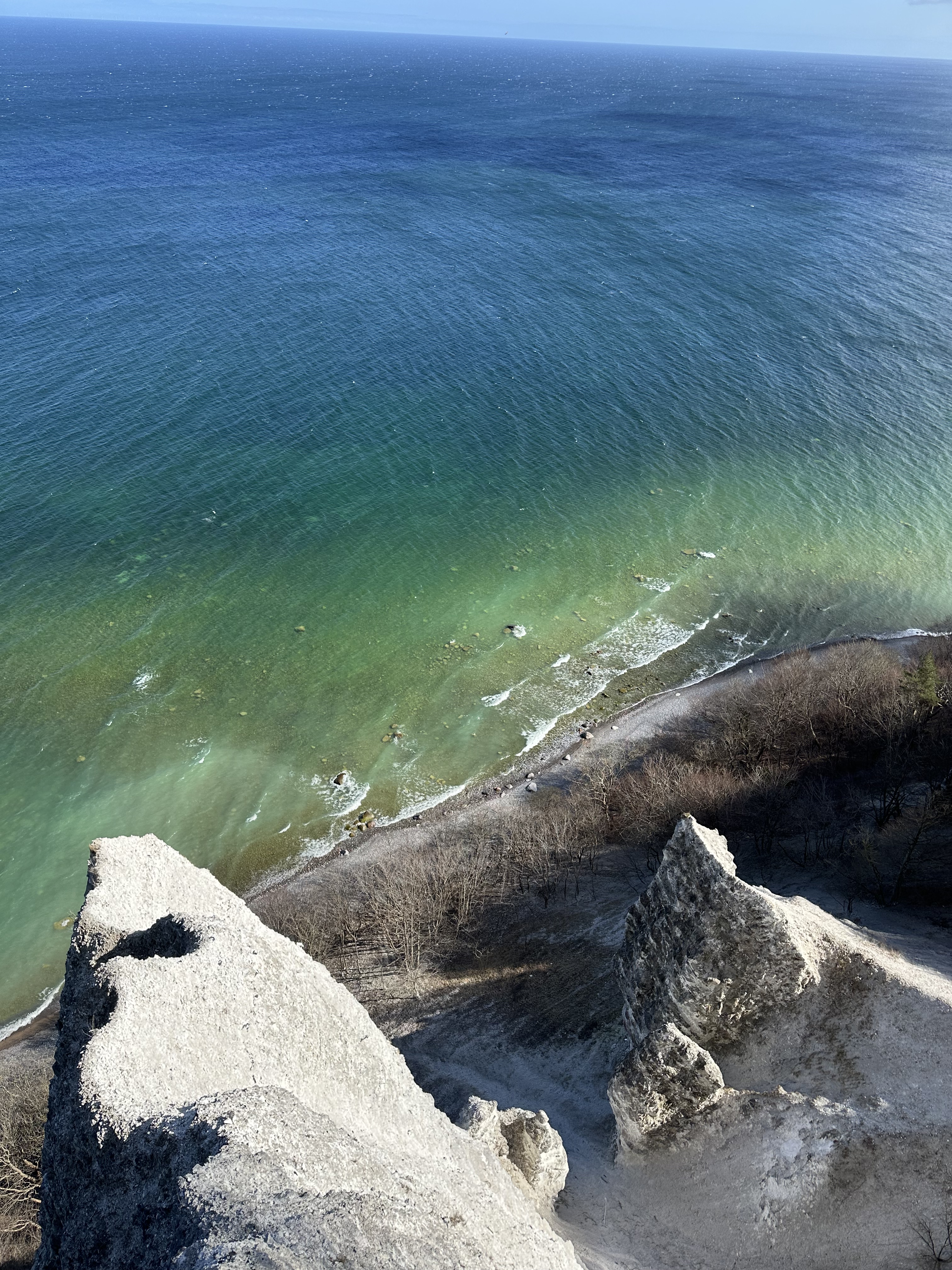
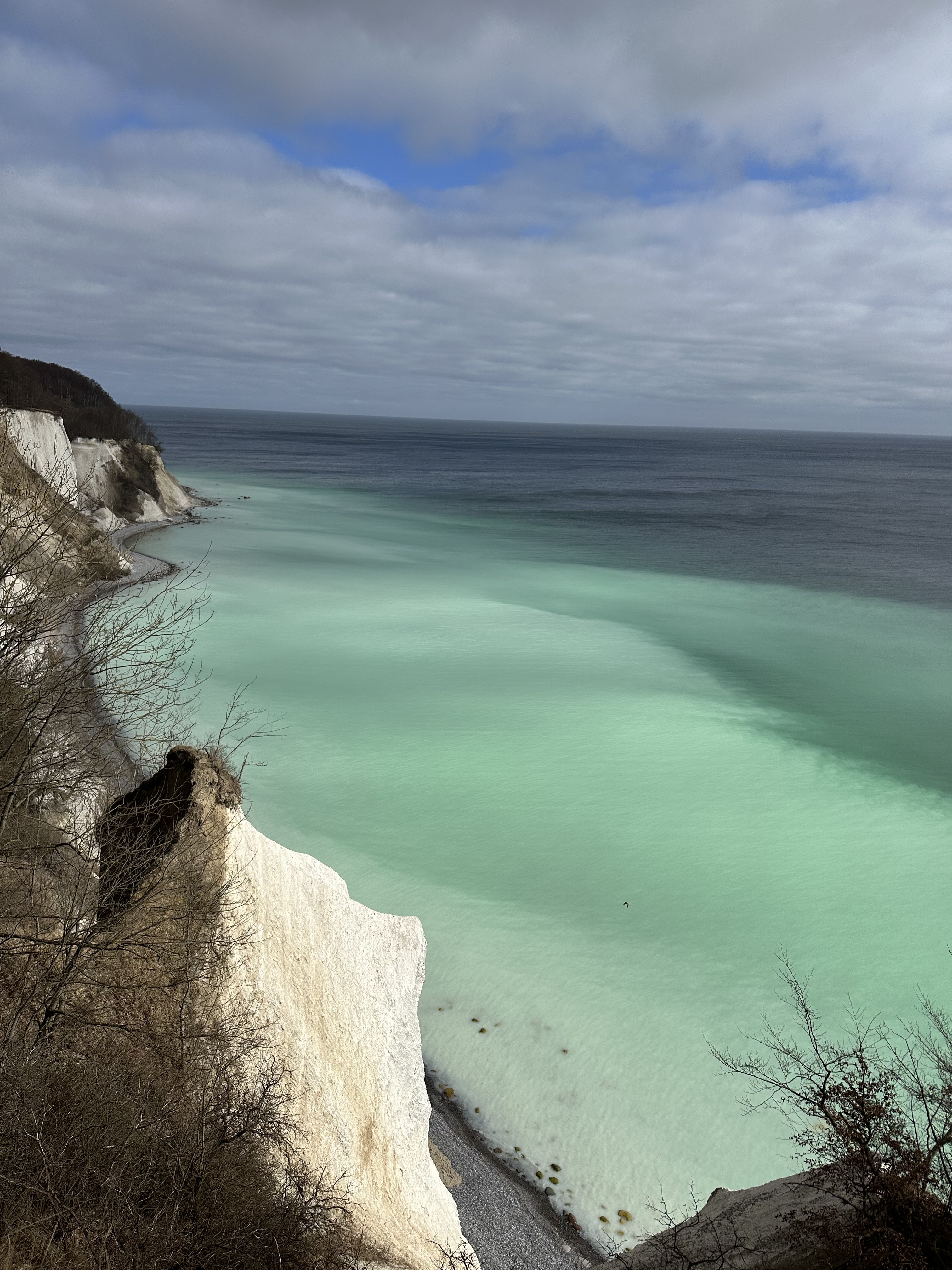
At many of these spots, you have the option to hike down to the beach, continue walking along the coast, or simply enjoy the views before heading back up. My personal favorites were Piratenschlucht and Wissower Klinken—they felt especially wild and untouched.
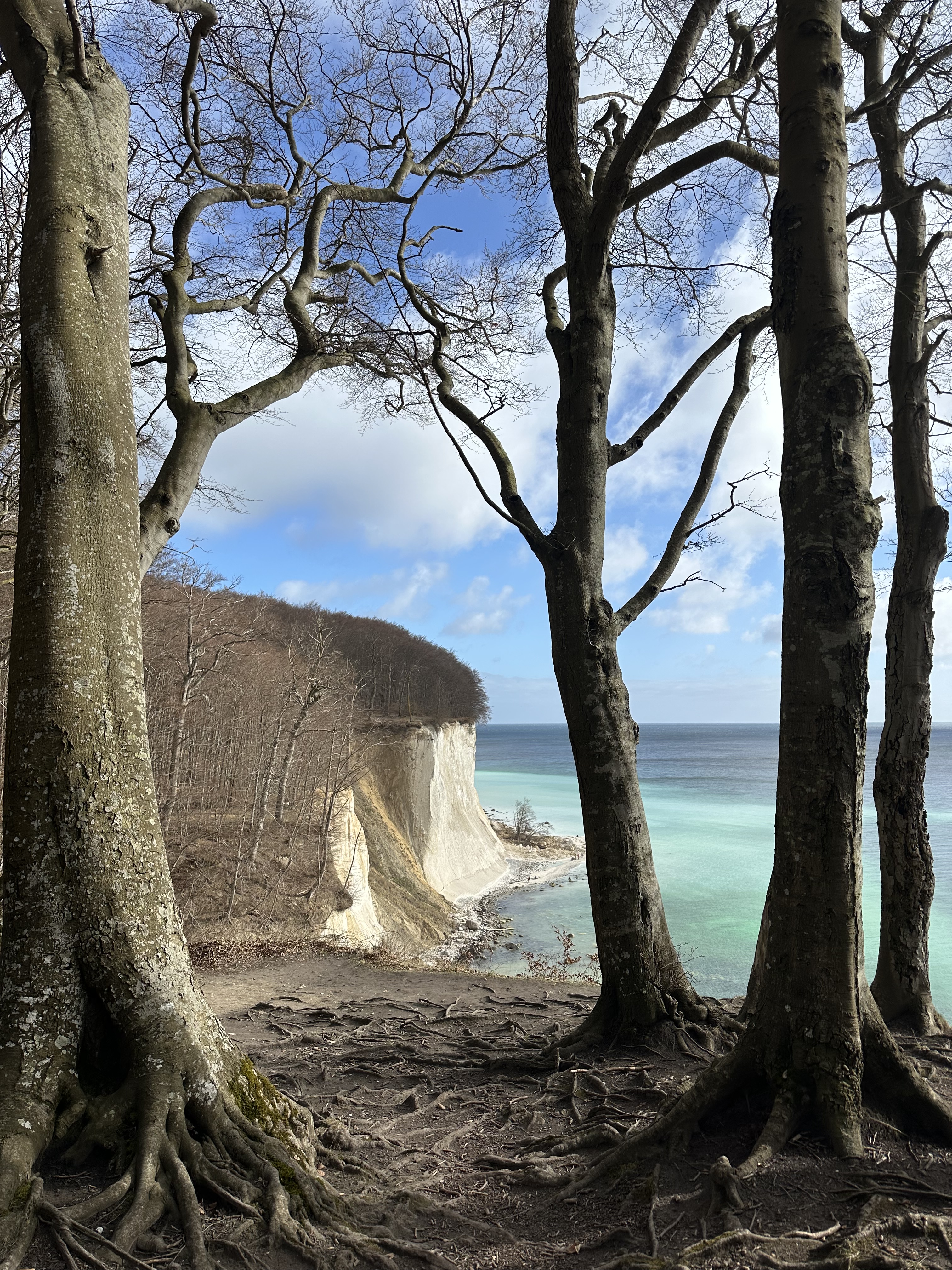
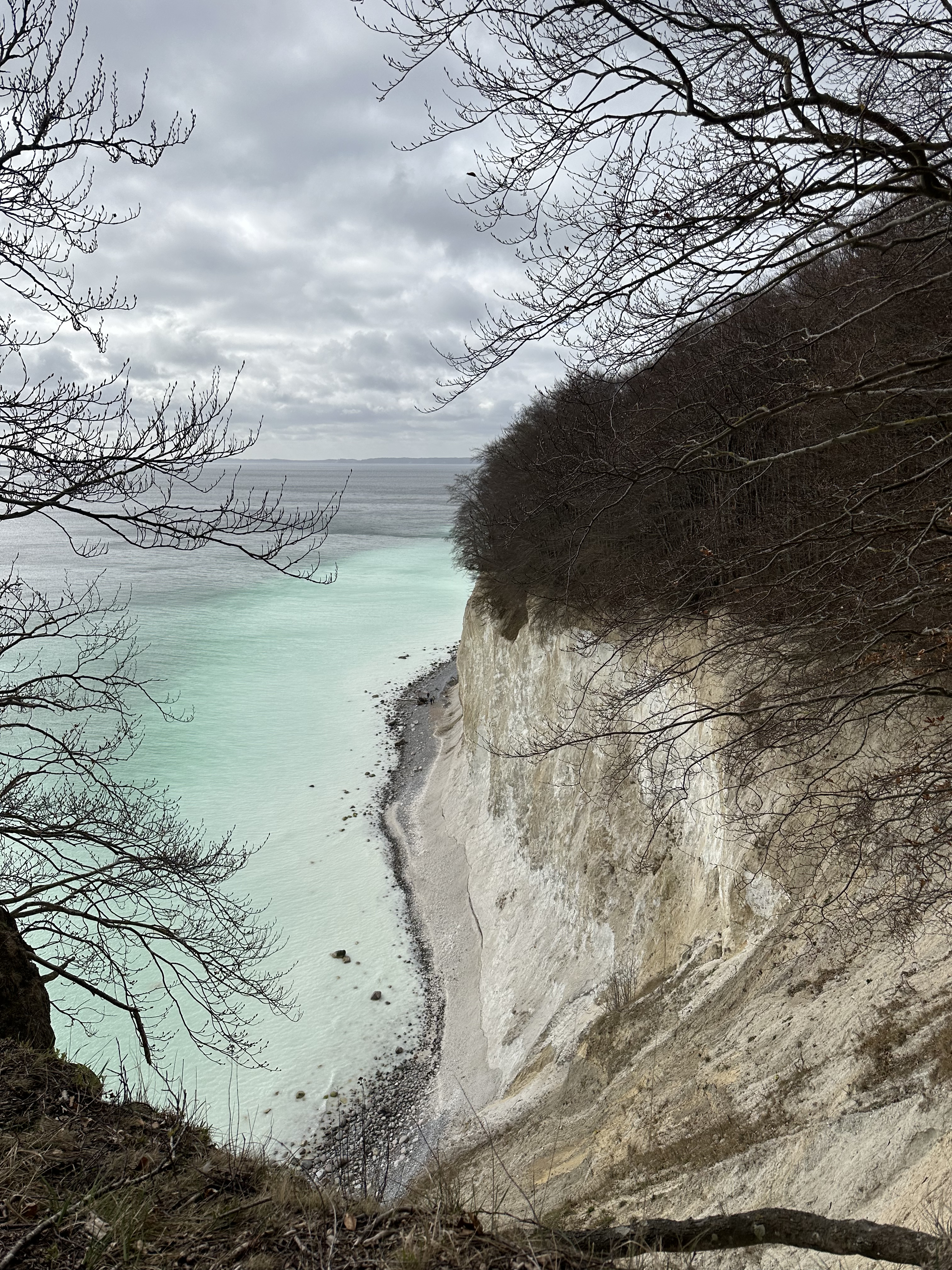
The entire route is around 8 km long but since we hiked up and down at the viewpoints we hiked around 11km. We also noticed that it became significantly more crowded towards the end. While we started in Sassnitz with only a few other hikers, the area near Königsstuhl was much busier. Many visitors take the bus directly there and pay an entrance fee (around €30) to access the main viewpoint.
We decided to skip that and instead enjoyed the many free viewpoints along the trail—which were more than stunning and, in our opinion, just as rewarding.
We started our hike in Sassnitz, where we had stayed overnight, and set off after breakfast at around 9:30 AM. The views were stunning right from the beginning. I had never seen anything quite like it—dense green forest meeting the deep blue sea in the background. It felt incredibly unique and made the whole hike special from the very first steps.
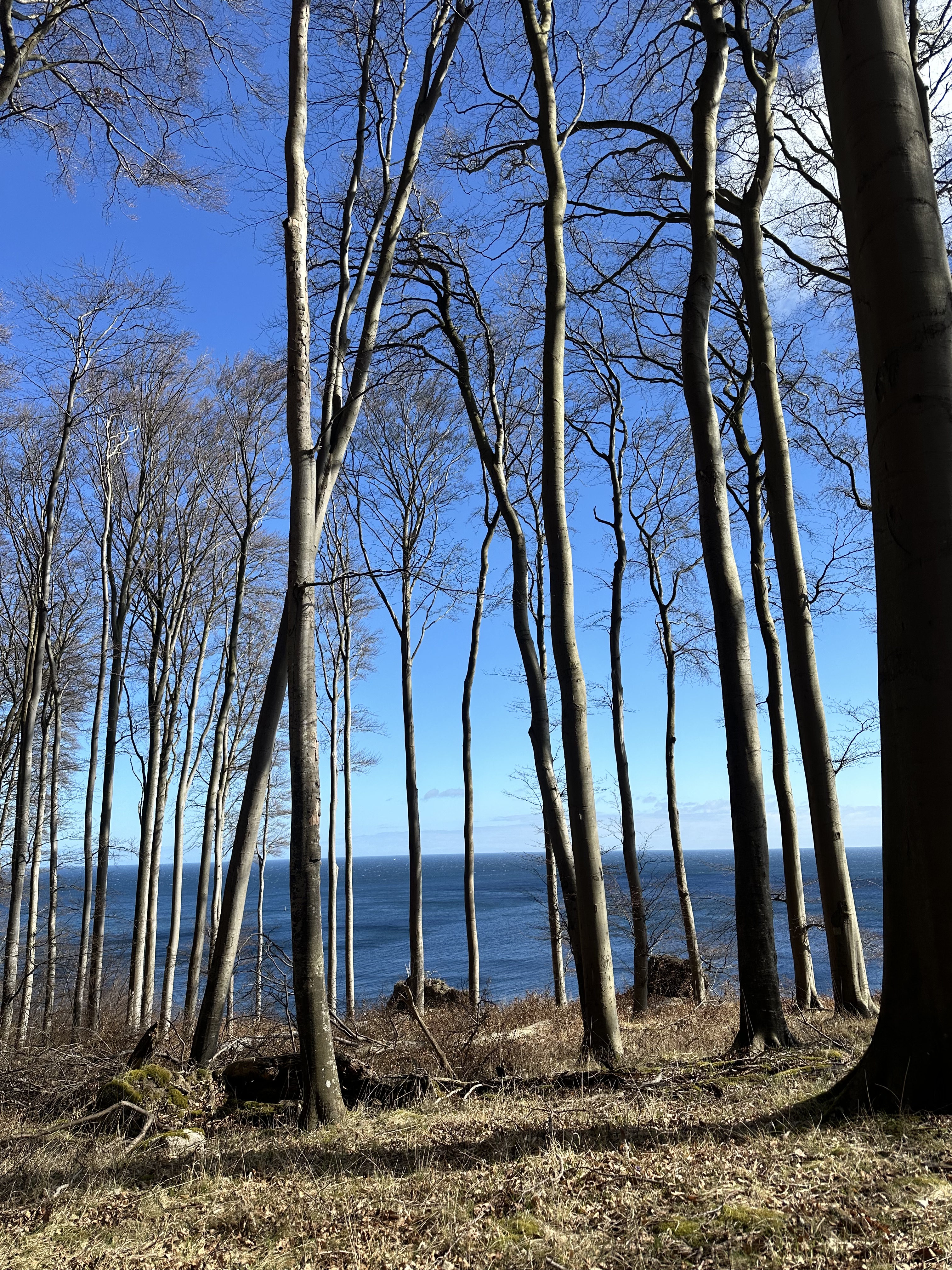
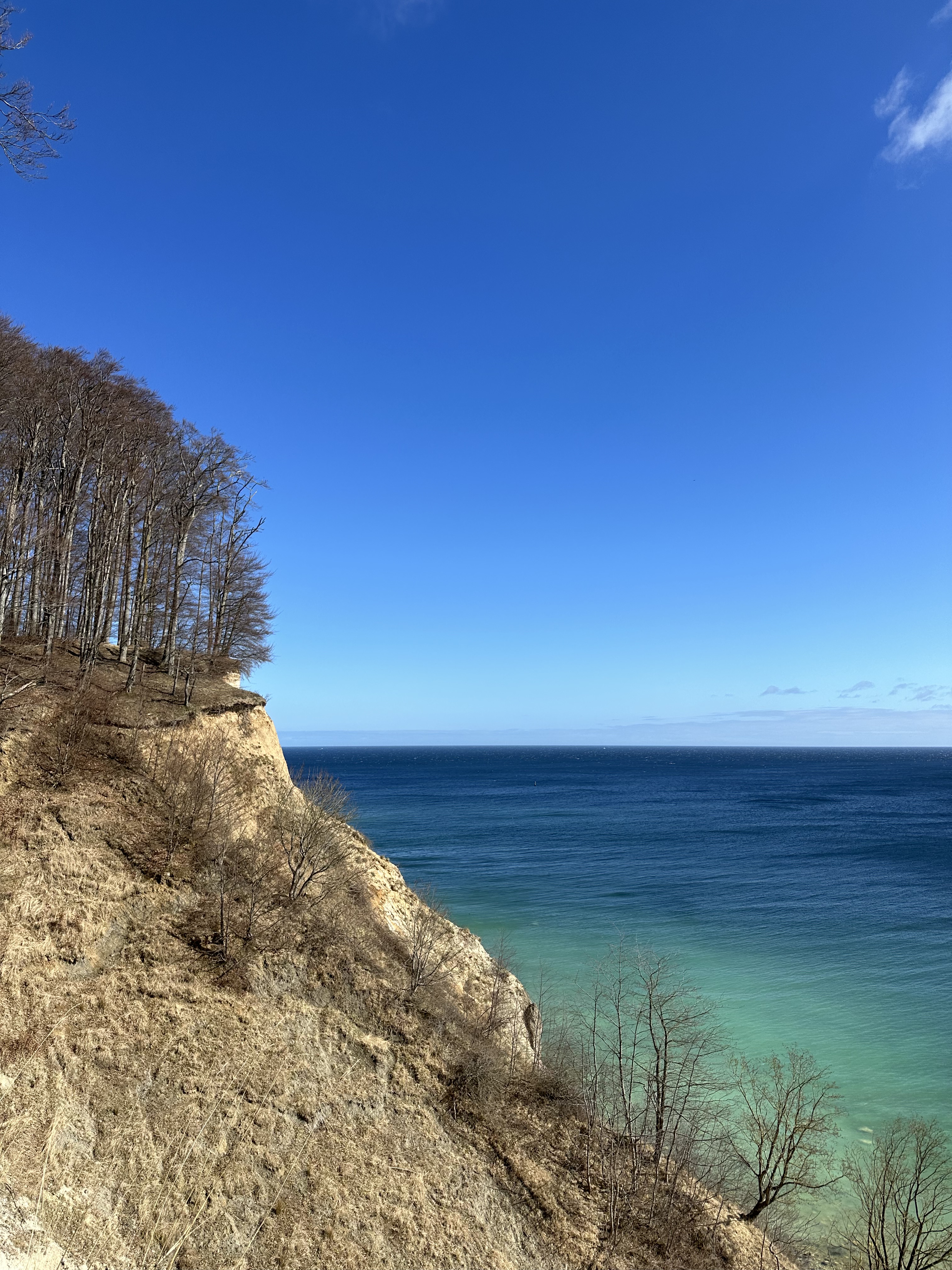
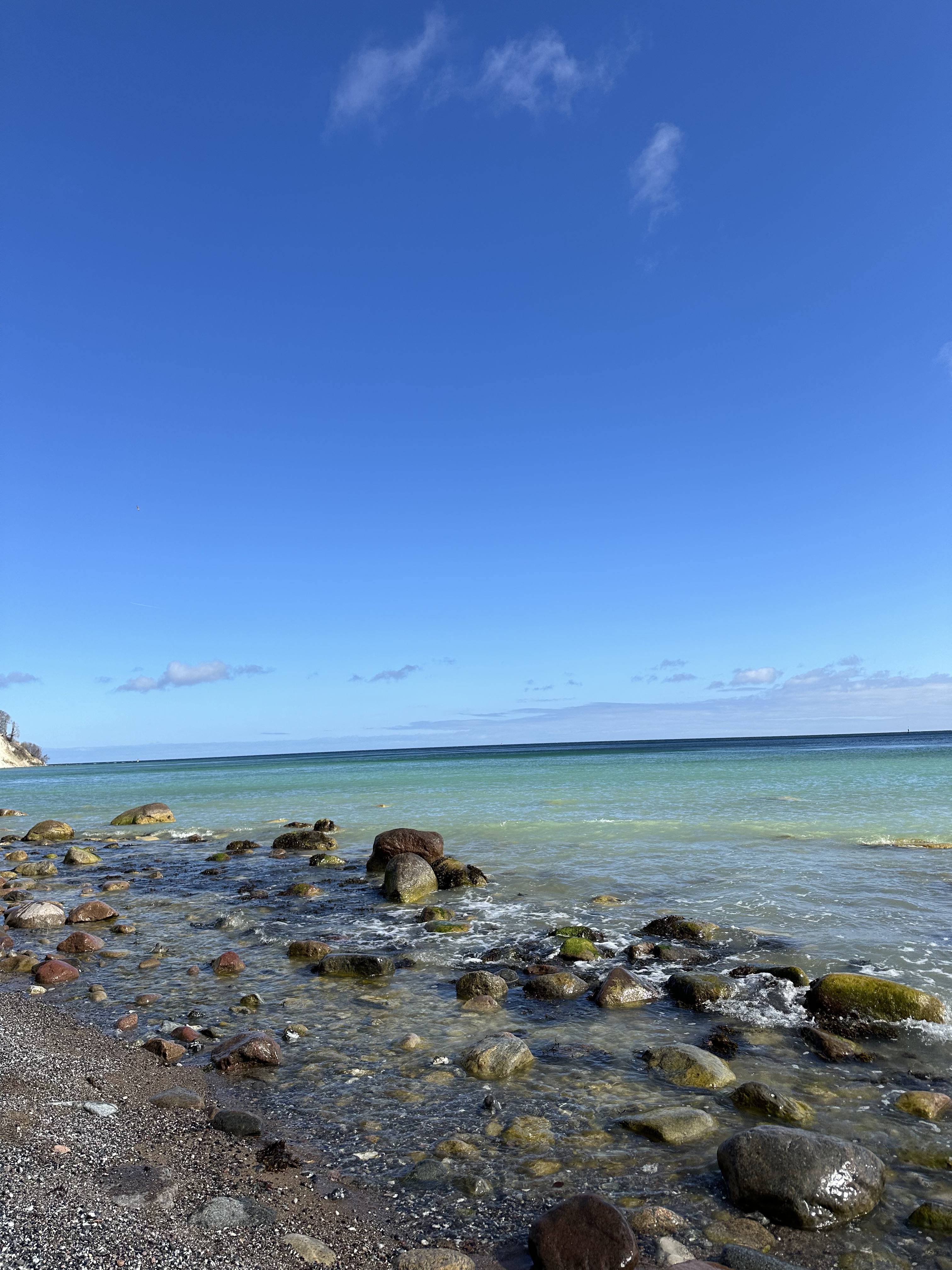
We hiked down at the Piratenschlucht to walk along the beach and soak up some sun before heading back up on the Hochuferweg to continue the hike.
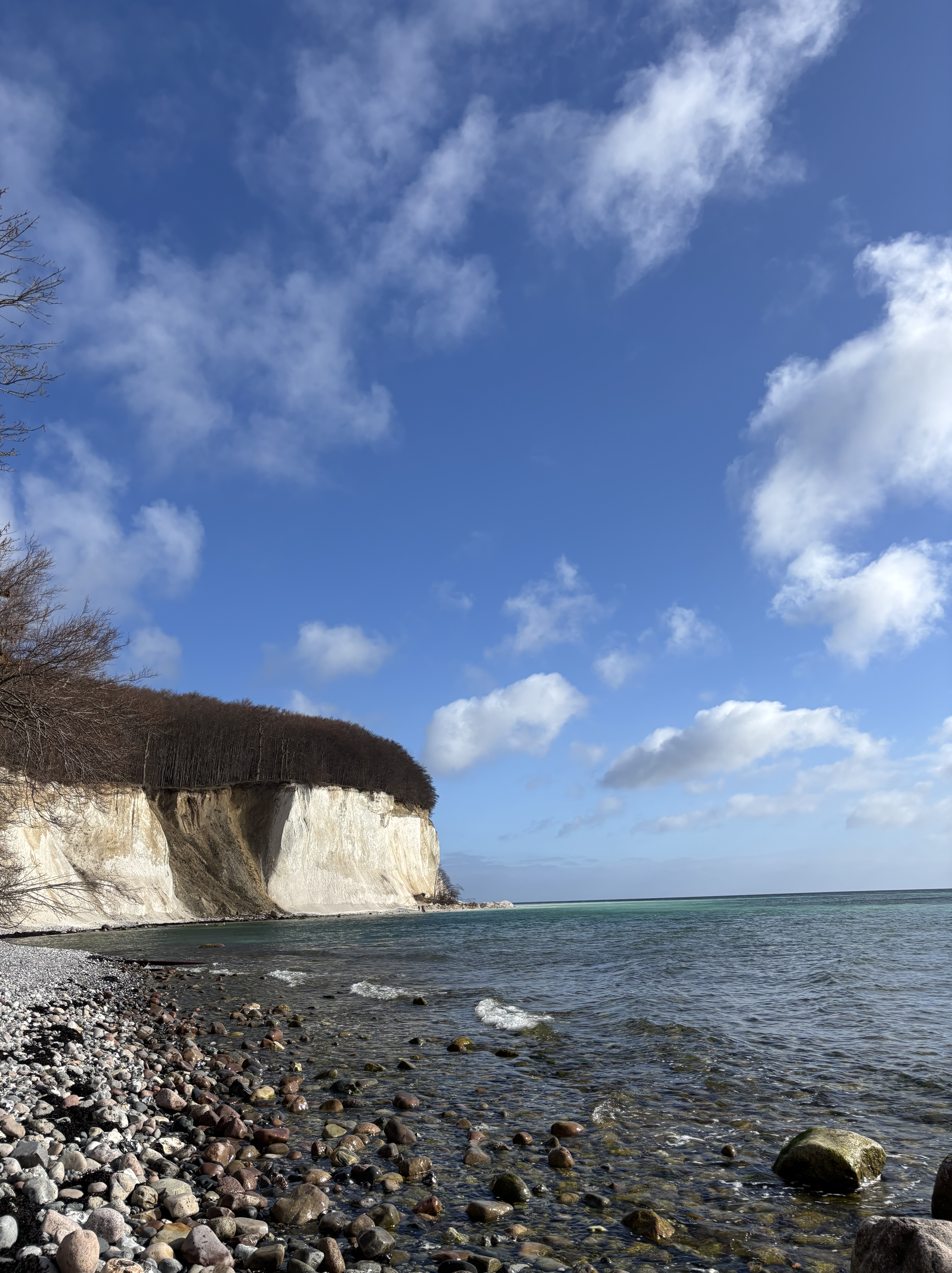
When we arrived at Königsstuhl, we decided to take the bus back to Sassnitz. Alternatively, you can continue the hike further to Lohme or even make your way all the way back on foot.
Is it worth it?
Hiking along the Hochuferweg to see the Kreidefelsen was without a doubt one of the most beautiful hikes I’ve done in Germany.What makes it so special is the constant contrast between the dense forest and the dramatic white cliffs dropping into the deep blue Baltic Sea. The views keep changing along the way, which makes the entire route feel exciting from start to finish.
Yes, it can get crowded—especially near Königsstuhl—but if you start early or begin in Sassnitz, you’ll still be able to enjoy long, peaceful stretches of the trail. For me, the real highlight wasn’t just one single viewpoint, but the journey itself. So take your time, stop often, and enjoy the scenery—because here, der Weg ist wirklich das Ziel 🙂






Kommentar verfassen